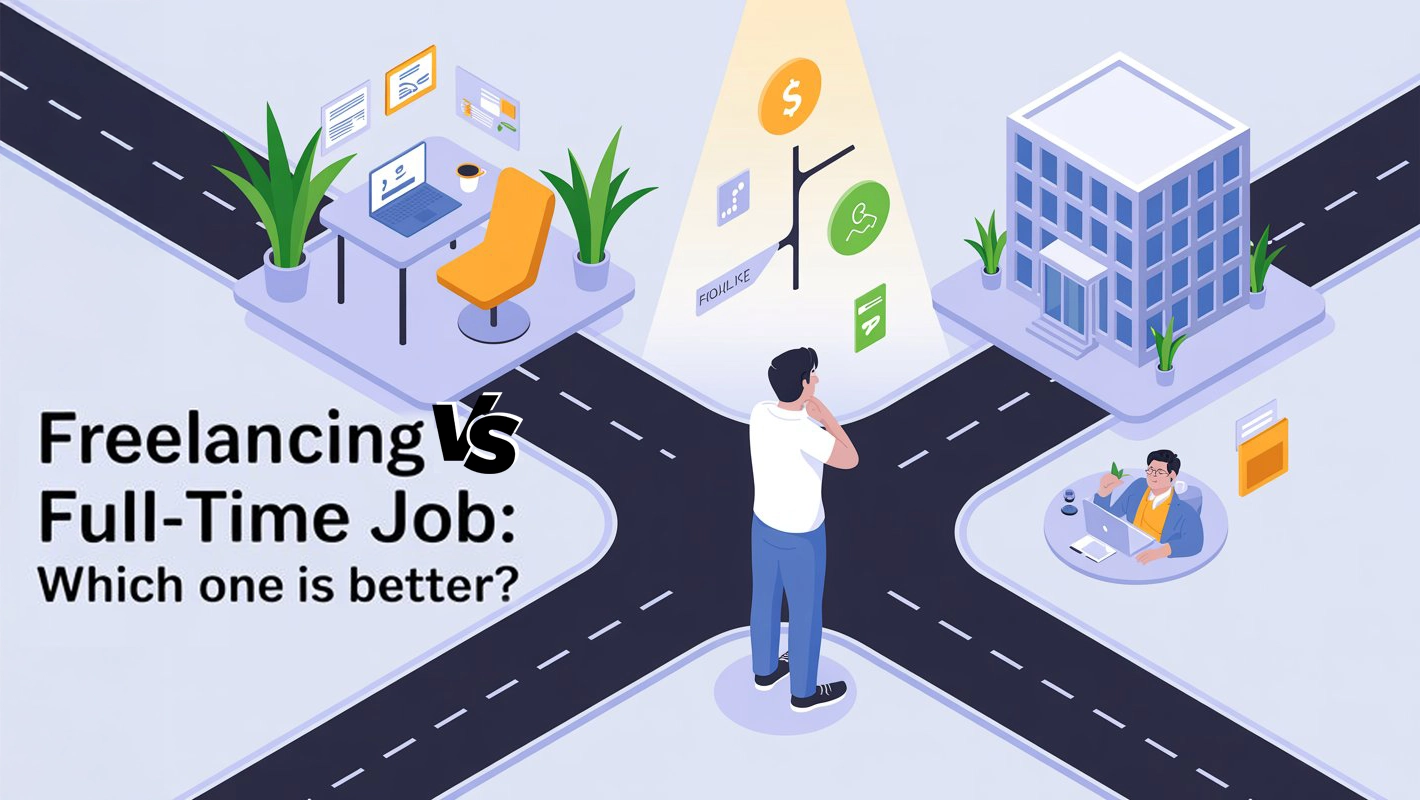
As a developer in 2025, you have more career choices than ever before. The digital economy has made it possible to work from anywhere, and for many developers, that means deciding between freelancing and a full-time job as a developer.
Both paths have their perks — freelancing offers independence and flexibility, while full-time employment brings stability and a consistent income. But which one is truly better for you?
In this blog, I’ll break down the differences between freelancing and full-time work, comparing factors like income, work-life balance, skill growth, and long-term opportunities. Whether you’re a beginner or an experienced developer, this guide will help you make an informed choice about where to invest your time and talent.
1. Understanding the Freelancing Lifestyle
Freelancing means working independently — offering your development skills to multiple clients instead of being tied to a single employer. You choose your projects, set your rates, and decide when and how you work.
For many developers, this path offers a sense of freedom that no job can match. You can work from home, a café, or even while traveling.
However, freelancing also comes with responsibilities. You are your own boss — but that also means handling client communication, contracts, invoicing, taxes, and marketing yourself.
In my journey as a freelance WordPress developer, freelancing allowed me to work with clients from different industries — from eCommerce websites to real estate platforms — and sharpen my skills faster than any single job could.
👉 Related: How I Got My First Freelance Client in WordPress Development
2. The Full-Time Developer Experience
A full-time developer job, on the other hand, means working for a single employer, often on a fixed salary. You have consistent income, structured work hours, and access to resources and mentorship.
You’re part of a team — collaborating on projects, participating in meetings, and focusing on a specific set of tasks.
For many developers, especially beginners, full-time jobs are the perfect place to gain experience, learn collaboration, and master coding standards.
At the same time, traditional jobs can sometimes limit your freedom. You may be required to work specific hours, report to management, or focus only on company-driven projects.
3. Freelancing vs. Full-Time Developer: Side-by-Side Comparison
| Category | Freelancing | Full-Time Job |
| Income Potential | High, but inconsistent | Fixed, stable salary |
| Work Flexibility | Complete freedom | Fixed working hours |
| Skill Development | Learn diverse tools and niches | Learn deeply within one system |
| Job Security | Depends on clients | More stable and predictable |
| Networking | Broad (global clients) | Limited (internal team) |
| Work-Life Balance | Can be excellent or chaotic | More structured, predictable |
| Growth Path | Unlimited (you scale yourself) | Defined by company hierarchy |
Both paths can lead to success — it’s all about your goals, mindset, and tolerance for risk.
4. Income and Financial Stability
When it comes to money, freelancing vs full-time developer roles differ greatly.
Freelancers have unlimited income potential. You can take on multiple projects, raise your rates, and even scale your services by hiring others. However, income is inconsistent — one month can be profitable, and the next might be slow.
Full-time jobs, meanwhile, guarantee predictable monthly paychecks. You’ll also receive benefits like paid leave, insurance, and sometimes bonuses.
👉 Example:
As a freelancer, I’ve had months where I earned 3x more than a traditional job would pay. But I’ve also faced slow periods when client work was scarce. The key is learning how to manage finances and maintain a client pipeline.
For beginners, a full-time role offers financial safety while building experience. Once you’re confident, you can shift to freelancing or a hybrid model (job + side projects).
5. Skill Development and Learning Opportunities
A full-time job often means working on a single product or within one tech stack. This helps you develop depth — mastering frameworks, understanding long-term architecture, and following team standards.
Freelancers, on the other hand, gain breadth. You’ll explore different industries, work on diverse projects, and adapt to new tools quickly.
For instance, one week you might build a WooCommerce website, and the next, optimize a landing page for Core Web Vitals. This variety keeps your learning curve steep.
👉 Learn more about performance optimization here:
Speed Optimization Tips: How to Make Your WordPress Website Faster
6. Work-Life Balance
Work-life balance depends on your habits more than your work type.
- Freelancers can design their day — taking breaks, traveling, or choosing late-night hours. But without discipline, this freedom can lead to burnout or disorganization.
- Full-time employees enjoy predictable schedules but may face commute stress or rigid working hours.
For developers who value autonomy, freelancing often wins. But if you thrive in structure, a job environment suits you better.
Tip: Many professionals today prefer a hybrid model — a stable job for security and freelancing on weekends for creative satisfaction and extra income.
7. Networking and Growth Opportunities
Freelancers have the advantage of working with global clients, which broadens their exposure to international business standards. You build relationships across industries and can grow into a consultant or agency owner.
In contrast, full-time jobs limit you to your internal company circle but can offer mentorship and teamwork opportunities — ideal for junior developers.
If you’re just starting out, combining both worlds can accelerate growth — start full-time to learn structure, then gradually freelance to explore your independence.
8. Challenges in Each Path
Freelancing Challenges:
- Inconsistent income and client flow.
- Requires self-discipline and marketing effort.
- No paid leave or employer benefits.
Full-Time Challenges:
- Less freedom over project choices.
- Limited income growth potential.
- Risk of burnout in repetitive tasks.
However, both challenges are manageable with the right strategy and mindset.
9. Which Path Offers More Freedom and Growth?
If freedom, creativity, and self-control excite you, freelancing will likely be your path. It lets you choose clients, set your rates, and work on projects you love.
But if stability, teamwork, and structured learning** are your goals, a full-time job gives you the comfort of consistency and a clear growth ladder.
In 2025, more developers are embracing the freelance-first economy, using platforms like Upwork, Fiverr, and LinkedIn to secure clients. However, having corporate experience still helps when pitching to serious clients — it adds trust and professionalism to your profile.
10. Real-Life Perspective: My Journey
When I began as a full-time WordPress developer, I worked at agencies like Xziant and Payomatix. That experience taught me process, teamwork, and project management.
Later, I transitioned into freelancing — building sites like Right4Paws, InteriorDesignWala, and FinX by Payomatix.
Freelancing gave me control over my projects, better income, and the chance to work directly with clients. The transition wasn’t easy — it took consistency and personal branding through my website amanaggarwal.in, but it was worth it.
Conclusion
So — freelancing vs full-time developer: which one is better?
The truth is, there’s no one-size-fits-all answer. Both paths can lead to success if aligned with your goals and lifestyle.
If you crave freedom, flexibility, and diverse learning, freelancing is the way. If you value structure, teamwork, and consistency, a full-time job fits best.
Remember, you can always combine both. Build your skills through employment, and once ready, expand your horizons with freelancing.
🚀 Want to build a strong freelance presence?
I’m Aman Aggarwal, a WordPress expert and freelancer mentor helping developers grow their personal brand online.
👉 Visit amanaggarwal.in to learn how to build your portfolio, attract clients, and start earning as a successful freelancer.